Monday, 27 May 2013

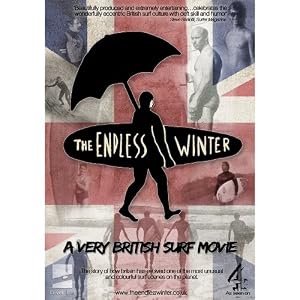
The Endless Winter - Review


Top professional Cornish surfers Mark ‘Igor’ Harris and Mitch Corbett are on a mission, a mission to discover the roots of surfing in the UK. Along the way they meet the iconic locals who went on to become legends and get to grips with what makes British surfing so special. The product of this journey is ‘The Endless Winter’, and what a journey it is.

“We wanted to make a film that British surfers could be proud of,” says producer Matt Crocker who, along with James Dean, is responsible for the movie.  And that they have done. The film is both interesting and informative, avoiding the Cornwall-heavy bias of many British surf films by including many spots such as the Gower, Brighton and Thurso East.


The film’s tagline is ‘A very British surf movie’, and it certainly goes to fill a gap in a market oversaturated with footage of warm water barrels in exotic locations. British surfing has evolved on its own terms and in its own time and the resulting eccentric characters and hardcore surfing community is covered well. 

Igor and Mitch come across as genuinely nice guys and connect well with those they are interviewing, such as surfing icons Pete ‘PJ’ Jones, Spencer Hargraves and Nigel Semmens. They reveal what UK surfing was like at its birth, such as the ridiculousness of surfing in a woolly jumper in January, whilst tackling more sensitive issues, such as the suicide of promising young surfer Nigel Veitch who dived off the cliffs at Tynemouth after losing his sponsor. The story is handled well and goes to show that getting British surfers on the map, not to mention the rankings, was not all plain sailing.

 Memorable scenes include when Igor and Mitch join ‘The Muddy Brothers’ by surfing the Severn Bore tidal wave in total darkness, and the section on Sennen’s legendary Skewjack Surf Camp. The film also reveals some surprising facts, such as surfing’s link to Agatha Christie, King Edward 8th and Captain James Cook, as well as the effect of the World Wars on the surfing community.  

It’s had a positive reception, it won Best British Film at the 2012 London Surf/Film Festival and enjoyed outdoor premiers all over the UK.  The soundtrack isn’t bad either; featuring the obvious, but still good, Devonshire surfer Ben Howard as well as others, such as The Fairport Convention and the imaginatively named Hotel Flamingo (I’d never heard of them either). It also includes black and white film footage as well as animations, courtesy of Simon Ball.

But there are problems. The in-water footage leaves a lot to desired, it’s shaky and unsteady and a couple of times during the Badlands section it even gets jammed into the sand, leaving viewers with an invigorating few seconds of Cornish seaweed. The film could have also done with some more footage of women surfers and groms, of which Britain has many, and excellent ones at that.
 
However, my main bugbear is that the production team are not surfers. Let me reiterate that, these guys don’t surf. In fact, in ‘The Making Of’ section, they admit that they found it hard when filming to anticipate the surfers’ next move on the wave, their lack of knowledge being so. It seems strange to have outsiders documenting and commenting on a community which is so notoriously insular and close-knit. Those of us who were not lucky enough to grow up surfing know how intimidating it can be at the beginning– the language, rules, hierarchy, etiquette, not to mention the sometimes aggressive localism. The well-worn idiom of ‘Only a surfer knows the feeling’ seems to be tested by this DVD.  

But they do make any effort to stick to just the main spots and don’t reveal any that viewers wouldn’t know about already. I wonder how much of that decision was based on the surfers’ code rather than the risk of getting their windscreen waxed or face the backlash from revealing a secret spot. Plus, when they approached and met the featured local surfers, who are legends in the surfing world, I wonder if they had the same deep-set respect and admiration that a surfer would have.  

On the flip side, it means that even those who are not surfers can understand, appreciate and be inspired by the film. And along with the 30 minutes of extras, the film is definitely worth a watch. It really does encapsulate what makes British surfing unique, the history and evolution surfing in the UK, and the fact that the never ending search for the perfect wave has been with us from the very beginning.

The Endless Winter trailer

Sunday, 12 May 2013

5 Reasons Why You Should Go Travelling

I'm now writing for gkbc Academy which is a volunteer blog. You are assigned a subject and write a piece for a company or website, adhering to the word count and and including the chosen keywords. Your work is edited and critiqued by professionals and then published online. It's pretty good.

I was asked to write two pieces, both of which discuss a certain statement, to check the standard of my writing before acceptance. Here's my first:

5 Reasons You Should Go Travelling

I try to convince everyone I meet to go travelling; shop assistants, hairdressers, random people I've sidled up to in the pub after one too many ciders. And, I really believe it.

Granted travelling, especially backpacking, is not for everyone. But if you've ever though about it but doubted you could, then I will try to convince you. Here are five of the many reasons I could list why you should go travelling:


Semana Santa in Antigua, Guatemala

1)   It helps you grow

 Yes, we've all heard it, the Gap Yah staple: "I really found myself at sunrise on a beach in Thailand." Pretentiousness aside, this is really what happens. Travelling changes you, it makes you more accepting of other people, opens your eyes to new cultures and teaches you to appreciate what you have. As twee as that sounds, it's difficult to feel hard done by when you see how some other people live.

2)   If you don't, you will always regret it

That's always a thing that people says, "I really wish I had travelled in my youth", but you never (well, hardly ever) hear anyone say, "Wow, I really wish I hadn't travelled so much and got myself a proper job earlier." Don't let not travelling be something which will hang over you. On my travels I've met fellow backpackers of all different ages, straight from school right up to those who have just retired and are getting out there. It's never too late.

Awesome sloth in the cloud forests of Panama

3)   It's easy

When I talk to people about travelling, they often says, "That sounds amazing, I wish I could do that." Well, you know what? You can. There isn't some secret handshake which you have to learn. Anyone can travel. Yes, even you. Save up, book a flight and plan. And once you've booked, you have to commit. It's that easy. Sure, it doesn't seem that way when you're stuck at  abus station where no one speaks English, or trying to sort out a visa at a border in the middle of nowhere. But remember that the hard times will be a funny story in a few months. Which brings me to my next point...

4)  Memories

Sure, my friends roll their eyes when I start an anecdote with; "This one time, in...." But, it's hard not to. Whilst travelling I've experienced things which I will remember forever, like sitting on a Mayan temple in the jungle watching the sunrise, or celebrating my 27th birthday at a snake feast in Hanoi. I'll have plenty of things to tell the Grandkids about.

An orphanage in Cambodia

5)   The people you meet along the way

Be it the locals or fellow backpackers, those you meet along the way colour your travels in a way which you will never expect or forget. Some you will know fleetingly, others you'll stay in contact with for years to come, but when you think back to a place you've travelled, the people who were with you are synonymous with your memory of that place. It is them who make up your experience.


St. Augustine once said, "The world is a book and those who do not travel read only one page." And if that doesn't convince or inspire you, I don't know what will. So, of you're thinking about it, ever considered it or entertained the thought for just a moment, my advice is to just do it. You won't regret it.
Trekking in Chiang Mai - Thailand

NYE 2008 - Rhythm and Vines Fesitval, Gisborne, New Zealand


x

Saturday, 4 May 2013

The Mayfly - Assessment Short Story.


Long time no see!

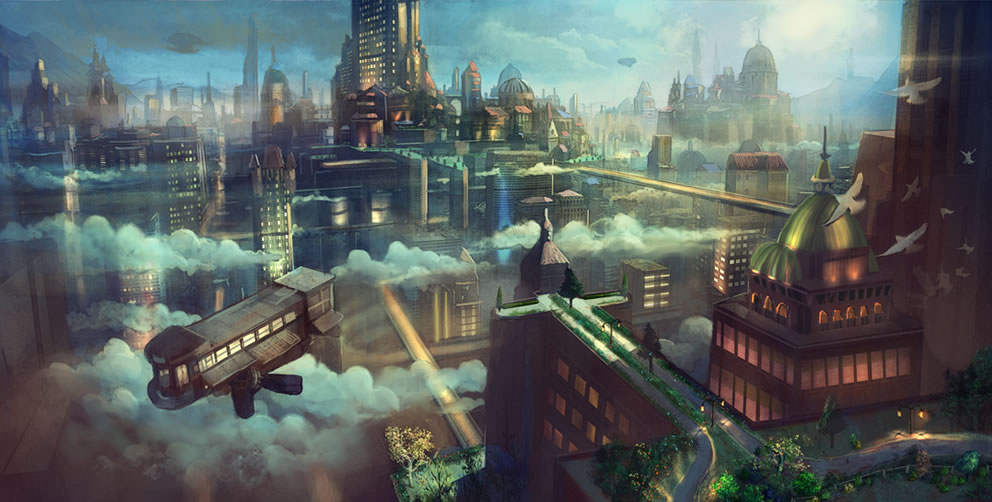
So, assessment time is upon is again and I chose to write a steampunk, alternate history love story.

In class we looked at China Mieville's novel The City and the City in which the city in question is split into two cities occupying the same space but not acknowledging eachother. It's a bit hard to explain, here's the
wiki.

So, I chose to write about a city which is divided not politically but temporally, meaning that the characters experience time at different speeds with each group ignorant of those who move faster than them. In fact, one group experiences time so slowly, that they only live for one of our days. SImilar to the fact that we know trees get bigger but we never see them actually grow, because it's too slow for us to acknowledge. Hmm, maybe you should just read it, let me know what you think:
 
The Mayfly

She was falling to the ground, her hair out in front of her like ribbons, her eyes locked on mine. I had touched her and she could see me.

She was looking right at me.

I should have moved, hidden, but her gaze held me petrified.  I watched her tumble, I stood by and saw her skirt begin to billow out in front of her. They moved around her, the others, the rumbling rocks. No one had noticed her yet.

But I had.

This one that I had been watching my whole life, who my Elder and his Elder had watched before me, and theirs before that. She was ours, our girl, our reason. My life revolved around her, around this moment. I saw the sign and I had acted, I had reached out and touched her.

 And now she could see me.

She had packed her bags, was carrying her luggage. She had taken her pictures off the wall and her trinkets off the shelf, she wasn’t planning on returning. Before my Elder passed, he told me that he had seen her book her ticket, that she was going to leave and we’d have to go with her.

We were bound to her.

I had watched her leave her house and followed her here, to this place which is full of them, the Dwellers. Their different shapes and sizes, colours and shadows. I looked on, as I do every day, as she took one ponderous step after another, surrounded by those who are like her yet not quite the same.  Their deliberate movements, their thundering speech. They moved around her but did not see what I saw.

She shone among them.

I’ve seen her grow. Spent an age watching her brush her hair or tie her laces. I know all her secrets, the Automon Spider she carries with her that’s been broken for years yet can’t bear to throw away, her grandmother’s engagement ring that she lost and didn’t tell anyone about. I know where it is of course, it had rolled between the floorboards and fell through a crack. It sits there still. She had looked for it for hours.

My Elder told me about the time she had fallen from a wheeler and broken her leg, she had screws in there now. His Elder had seen her trip when she was smaller, bite her lip and draw blood. If you looked closely you could still see the scar there now. She hated it, but for me it linked me to my Elder-Line, they had witnessed the event and I could still see the evidence. It tied me to them.

I knew every line on her face, every mark, scar and freckle. I knew her routines, that she didn’t like strawberries, that she secretly wished she could be a little taller, and that one time she had cut herself just to see what it would feel like. In her almanacs I had read about the first boy she had loved, the one she kept a picture of in her diary. He didn’t know, she never told him.

He didn’t deserve her.

Others had begun to notice she was falling, I saw their eyes pivot toward her. The girl all in red, a battered suitcase in each hand, tipping back on her heels. A lamplighter over near the clacker stand had seen her, he made as if to go to her and break her fall. He wouldn’t make it in time though. Neither would the woman with the cages of bronze birds, little gems and beads lining their wings, clicking and whirring, their tiny eyes lit green. Souls made from cogs and springs.

And through all of this she watched me, her eyes crinkled in confusion. Or in fear.

I looked down at her tickets, the ones I had taken from her hand, embossed and perforated and gold around the edges. There were words on them, a language we didn’t understand. I had panicked, I had had to stop her getting on that airship, it wasn’t the way for her. I had felt it, the premonition, the foreboding feeling, I saw a flash and that had confirmed it.  I was taught to rely on my instincts and it had been my time to act.

I looked up at the airship, creaking on its ropes, the bunting tethered to the ground undulated in the breeze. There was a band on the boarding platform, their brass buttons shone in the noon sun. Above, the propellers cut lazy circles from the heavy summer air and the steering bellows wheezed laboriously. The light glinted off the domed observation windows and mottled on the side sails, it was hard to look right at it.

Everything seemed so perfect.

There were Dwellers up there, hundreds of them, hanging their heads over the railing and waving, smiling and laughing, shouting and singing. I watched the streamers spiral, the confetti rain down around the Dweller crowd. I could have plucked it right out of the air if I had wanted to, but instead I let it fall to my feet, to become muddied in the cobbled puddles.
 
When I looked at her again, she was nearing horizontal, her back straight and her body stiff. The woman with the birds had opened her mouth and was booming, the lamplighter had dropped his torch and was midflight, other Dwellers were turning to look. A sea of moving faces under feathers and hats.

 Yet still she fell.

Then, her eyes left mine and began to roll up into her head.  Through her eyelashes I could see the white crescents, her blinking drummed a rhythm. I saw a tear scribe a smooth arc down her cheek, one and then another. She stayed like this until she hit the floor. They were almost to her, to try and catch her as she fell, to cushion the impact.

But the only one who could have caught her was me.

Her head cracked against the cobbles with a shattering blow, rebounding twice.  The thud was deafening, her neck snapped back and forth, her ringlets uncoiling. A suitcase burst open, her belongings airborne in a leaden parabola. Out tumbled the Spider, its internal cogs and defunct springs flying, catching the sun as it smashed into the ground, it’s visceral mechanics skittering away.

They were beginning to crowd around her, I needed to move. I slipped in between them as they circled her, leaned in over her, concern on their faces. Through their legs I could see her body lift and contort, her jaw bulging as her teeth churned against each other, her hands balled into fists. I saw her tendons tightening in her neck and forearms, the muscles contracting and twisting. The Dwellers around her looked at each other, unsure of what to do.

She hadn’t done this before, it would have been recorded, written down in her almanacs. I had studied them over and over again and there was nothing like that in there. I knew everything about her yet never expected anything like this.

There must have been a reason, or is all this for nothing, a leap of faith into a bottomless pit. I had felt so sure that it had been the time. I glanced wildly around me.

It has to be something around here, somewhere.

I looked up and I saw it, there was smoke coming from the airship. Only the smallest bit at the moment, not enough for them to realise. Wispy spirals too slight to notice, reaching tendrils that gradually bloomed from white to grey to black. A glow permeated the fabric, it was alight inside. There was no explosion, or warning, just a slow creep of illumination, a lumbering blaze, the shuffling death.

I stood transfixed. A butterfly ambled lethargically past me, I could feel the whirring vibrations of its metal wings as it passed.

This was it.

I looked at her again. She lay still, someone was putting a coat under her head. Her eyes were open, but dull and glazed over, staring straight up. The bird woman was holding her hand, her other lay on her forehead. A man in a tall hat had pulled over a talker, the boy looked over their shoulders in concern as the man shouted into the speaking tube, his other finger jammed into his free ear. Another man had begun to take off his jacket.

The smoke had begun to turn black, spiralling skyward. Before long the plumes were haemorrhaging through the breach, the ribs of the ships structure were already beginning to show.  The flames were spreading, the internal luminosity growing in size and intensity. As I watched, a lone piece of ash pirouetted through my gaze, I let it come to rest on my upturned palm, it was still alight.

They began to scream.


From my vantage point I could see it all. He who attended her, the Sleeper in red. I had been watching him from the beginning, from my very birth. From the moment I felt the sliding warmth engender me, I became it and it became me.

As a child I had followed him, from that other part of town. The part with the spirals and bridges, and the towers that sit so close to one another and the lights that live inside, behind the coloured glass. They are like me, but different. They glow through metal, harnessed, enslaved, ready to be used again and again, trapped by those who live through the darkness, when the Mother-Sun has gone, the ones who live forever, through countless cycles.

He was down there in the crowd, among them, surrounded by them, the Sleepers. He was going to follow her onto the ship, the one which was packed full of them. They put so much faith in these things, these objects and technologies. They didn’t see what I see, the near misses, the imperceptible wear and tear. They lived too slow for that.
 

I knew it was going to happen, of course, I had watched the air change and the gas leak. It was lighter than the air around it, I watched it escape and then float away, dissipating into the blue. It was so obvious, to me. I had been watching the cogs and pulleys and cams and pistons, I had seen them ever so slightly skip a beat, or change rhythm, move a little off course, misfire.

They never notice, of course.

I had seen the charge begin to build up, the minute spark which would trigger all this. I knew there and then that the time to act was upon me. I had looked over the side, seen him next to her, they were going to climb the tower, pass the band and then board. He needed to be saved and I was ready to do it.

I had watched him until he slowly rotated his head in my direction, before gathering myself and sending out a charge. Nothing too obvious, just a flash, a reflection perhaps, or a spark. A message.

He had seen.

I had floated down for a closer look, to make sure. This close, I could see the panic in his eyes and etched across his face. I watched him begin to circle her, to search her for a way to intercept, a way to change her life-course without her noticing.

By the time I had drifted back up to the ship, the leak had doubled in intensity. I could see the pressure of it as it forced its way through the puncture holes. I could see the air moving with the rising temperature, shimmering ripples of combustion. I could feel its energy, the static in the air, I watched the dancing phosphoresce as it converged across the fabric.

I looked down at him, he was reaching tentatively toward her. I sailed down to them. His hand moving toward hers, carefully as not to touch her unnecessarily. He was going to take the paper tickets which she held pinched between her thumb and forefinger, her others curled around the handle of a case. I watched him for a while as his fingers edged closer and closer towards hers, I was envious of their proximity.

They were almost touching.

I wanted to be part of it, I wanted to feel him like he felt her.

He who made me shine.

I wanted to know what they’d have when they made contact, when he reached to her and they touched. I wanted to share in it, take away its intimacy.

And so, when he was just closing in on her, ready to swipe the tickets out of her hand, I held out my hand and lightly placed it over theirs.

The surge of energy pulsed through me, it hammered at the inside of my chest and jolted down my back. I retreated instantly through the static crackle, electricity flickering on my fingertips

I had bridged the gap.

 I had completed the circuit.


I woke up to the sounds of running footsteps. I didn’t understand where I was. My head was pounding, a dull, thudding pain. I could hear voices, screaming. There was something falling from the sky, bits of black paper, a cloud of dust perhaps, I could feel it settling on my face. There was someone holding my hand, a woman. I moved my eyes to look at her, she didn’t see me. She was gazing up at something.

I squeezed her hand, the woman looked down at me.

“She’s awake. You’re ok, just had a fall. Do you think you can walk, we have to move.” There was an edge to her voice.

I nodded, I felt sick. She pulled on my arm and helped me to my feet, slipped her arm around me and under my shoulder.

I could hear the horns of the emergency wheelers, there was something happening.  

“What’s -“

“Don’t try to speak right now, we need to move out of the square,” she began to shuffle me forwards, my head was spinning.

“Why?”

“There’s been an accident.”

I remembered that I had been going to the airship, today was the day that I was leaving for the Islands.  And there was something else...

There were people running everywhere, they bumped into us as they tried to get in or out of the square. I didn’t understand what was happening. My head was still aching, my vision blurry.

There were people crying, shouting. There was a tinge to the air, a taste. I could feel heat pressing through my summer dress and onto my back.

Burning.

I stopped and swung around.  There, suspended from what was once the boarding tower, hung the twisted girders of the airship, like the skeletal remains of some giant insect swathed in fire. I gasped, the scene was like something from the Centre War. Black smoke billowed out of the wreck, diluting the midday sun. There was death in the air.

The sun.

 I remembered. I had seen something, someone, a man.

“Oh Gods, look,” she held her hand out to point, I followed her gaze. There were people jumping from the remains of the ship, a last ditch attempt to escape the engulfing inferno. Some of them were on fire.

A man, a man who had seen me as I fell. A man who was different. A man who moved so fast.

“We have to get out of here,” she said and began pulling at my arm. But I wanted to stay, I wanted to help. I felt...connected to it somehow.

Two wheelermen pushed past me holding a stretcher. The indistinguishable figure on it held its arms up rigidly, the burns so tight around the elbows that they would not bend, charred skin hanging like second sleeves. It was one of the lucky ones, the square was strewn with bodies, pulled out of the wreckage, already dead or deemed without hope, left to go quietly. The wretched meek, scratching pathetically on Death’s door.  

 Yes. I had seen a man, I didn’t recognise him but I knew him. He had been there when I had fainted. I looked for him in the crowd, I’d never find him now.

The airship was now completely in flames, the wood and fabric providing the perfect fuel. The air was filled with ash, it was hard to breathe, many had tied scarves around their faces. The smell of charcoal and burning flesh hung heavy in the air. I tried not to think about it.

 “Come on,” I said to the woman as I tore a strip off my dress and tying it around my mouth. With a sigh she did the same. We pushed further into the square, the heat was almost unbearable even here. We started circling the bodies, checking for signs of life. There weren’t many, most of them had been burnt beyond recognition, their clothes singed and black. This one must have been a child, the rigour mortis bending it into the foetal position it had so recently come from. And here a woman, she still had patches of long blonde hair. I went to move on.
 

Wait. Movement. She was moving.

I bent down, put my cheek near her scorched face, no breath. She moved again, it was under her clothes, I unknotted the fabric at the front of her dress and out shot a tiny hand, clean and perfect.

There was a heaving screech, I looked up. The tower was beginning to collapse. I pulled out the child and ran.
                                                           x
 

Monday, 4 March 2013

Counterfactual History

This piece is based on counter-factual history, which is described by some lovely person at Wikipedia as this:


'Counterfactual history, also sometimes referred to as virtual history, is a form of historiography that attempts to answer "what if" questions known as counterfactuals. It seeks to explore history and historical incidents by means of extrapolating a timeline in which certain key historical events did not happen or had an outcome which was different from that which did in fact occur. It has produced a book genre which is variously called alternative history, speculative history, counterfactual history, or hypothetical history.'
 
It is seen in novels such as Resistance by Owen Sheers, or Fatherland by Robert Harris. Both of these texts are focused around the idea of the Allies losing the Second World War, and the Nazis invading Britain.
Fatherland is on my to-read pile, but  I really enjoyed Resistance.

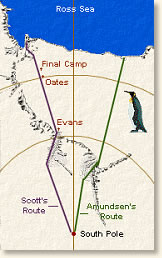
So, reluctantly sticking with the 'Scott of the Antarctic' theme (my lecturer seems to love it), here's my counter-factual take on the disembarking of the Terra Nova.


We built this city on rock and coal.


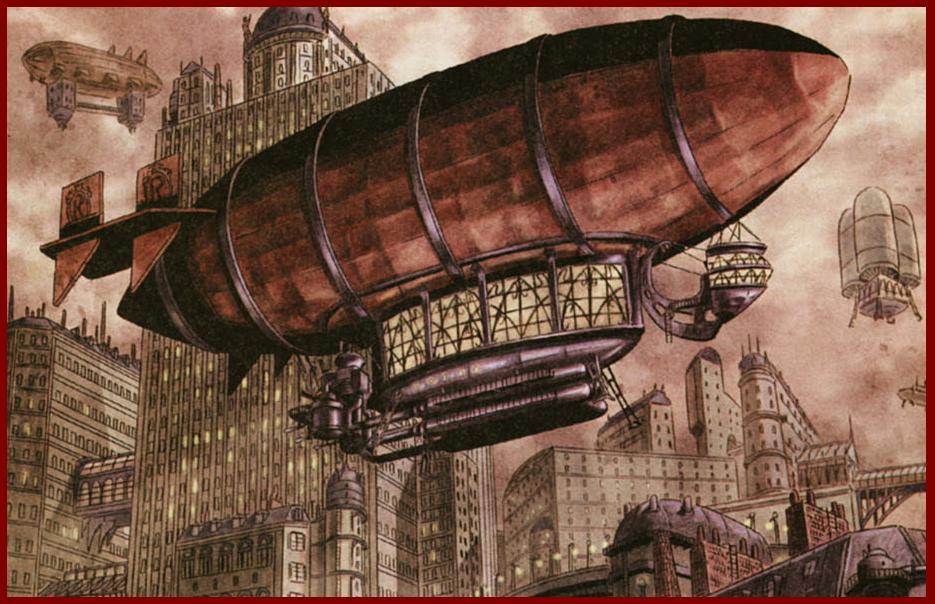
Evans looked over the edge of the observation platform, they were almost ready to go. The pile of the supplies on the tethering tower had dwindled, been successfully stowed somewhere aboard ship. The ponies had been difficult. As everyone knows, ponies are notoriously malfooted when it comes to ladders. Even the specialised, extra wide rung one which had been gifted to them. They were settled now though, he could hear them beneath deck, contented snuffling and nosing their hay. He wondered if ponies had a fear of heights. He hoped not.

From up here the crowd just looked like a sea of hats, all fancy and colourful with feathers and flowers. The noon sun prevented anyone from looking up for too long, he liked it that way. They’d shield their eyes with one hand, and wave with the other. He didn’t wave back though. He could see Scott down there too, checking the ropes, making the final adjustments, looking over the hydrogen tanks.

He reached out over the railing and hooked his finger over a string of bunting and pulled it back. When released it made a satisfying twanging sound. A seagull at the other end of the rope squawked as it wobbled to a standstill. Evans looked at the seagull, the seagull looked at him. Then, with the slight narrowing of his eyes and a flourish of the tail, the seagull pooped. Evans watched it sail down and then splash onto a lady’s hat. She didn’t even notice.

The crowd roared beneath him and the band struck up. He saw Scott begin to climb the ladder. Evans slipped on his flying goggles and the engine spluttered into life. He cracked a smile and waved disconsolately as the propellers began to turn.


Thursday, 28 February 2013

The Terra Nova.

So, Edgar Evans was in fact the first person from Scott's crew to pass away on the expedition. He had cut his hand tending to a sleight and suffered from frostbite and exhaustion. Just before his death, he was described as turning mad - perhaps from the stress, illness or a fall. Here's an exerpt from Scott's diary:

"Saturday, February 17 - A very terrible day. Evans looked a little better after a good sleep, and declared, as he always did, that he was quite well. He started in his place on the traces, but half an hour later worked his ski shoes adrift, and had to leave the sledge. The surface was awful, the soft recently fallen snow clogging the ski and runners at every step, the sledge groaning, the sky overcast, and the land hazy. We stopped after about one hour, and Evans came up again, but very slowly.

Half an hour later he dropped out again on the same plea. He asked Bowers to lend him a piece of string. I cautioned him to come on as quickly as he could, and he answered cheerfully as I thought. We had to push on, and the remainder of us were forced to pull very hard, sweating heavily. Abreast the Monument Rock we stopped, and seeing Evans a long way astern, I camped for lunch. There was no alarm at first, and we prepared tea and our own meal, consuming the latter.

After lunch, and Evans still not appearing, we looked out, to see him still afar off. By this time we were alarmed, and all four started back on ski. I was first to reach the poor man and shocked at his appearance; he was on his knees with clothing disarranged, hands uncovered and frostbitten, and a wild look in his eyes. Asked what was the matter, he replied with a slow speech that he didn't know, but thought he must have fainted. We got him on his feet, but after two or three steps he sank down again. He showed every sign of complete collapse. Wilson, Bowers, and I went back for the sledge, whilst Oates remained with him.

When we returned he was practically unconscious, and when we got him into the tent quite comatose. He died quietly at 12.30 A.M. On discussing the symptoms we think he began to get weaker just before we reached the Pole, and that his downward path was accelerated first by the shock of his frostbitten fingers, and later by falls during rough travelling on the glacier, further by his loss of all confidence in himself. Wilson thinks it certain he must have injured his brain by a fall.

It is a terrible thing to lose a companion in this way, but calm reflection shows that there could not have been a better ending to the terrible anxieties of the past week. Discussion of the situation at lunch yesterday shows us what a desperate pass we were in with a sick man on our hands at such a distance from home."

Taken from: http://www.eyewitnesstohistory.com/scott.htm

The Terra Nova expedition had been gifted many things by wellwishers, including coal, cigars, plum puddings (?) and even a piano. In this piece I am describing a woman being shown around the ship before deperature (as they often were), and standing at the piano. I have used the piano as a metaphor for the declining mental state of Evans, who is with her at that time:


The Piano Man

“The wood will warp, sat out in the elements like this,” she thought, “the moist conditions will wreck it.” It’ll look the same, of course, on the outside but the workings will deform. The ice will work into its belly and fatten the dampeners, and the frost will make the strings creep.

The effect will be gradual of course, changing ever so slightly over time. Getting almost imperceptibly flatter and flatter until one day it’ll sound so horribly out of tune that you’ll wonder how you hadn’t picked up on it before. You don’t notice these things though, not until the string is stretched so tight that it’s likely to snap at any moment.

She felt sorry for this piano.

She took off a glove, ran her hand over the varnished mahogany, before lifting up the fall and pressing a key.

The note sounded out, as clear as a bell. A nearby pony looked up lazily from its hay, regarding her with its listless eyes before returning to his meal.

She looked up at him; a big oaf in a sailor outfit, smiling down at her.

“You like the piano, miss?” he said.

“Yes, very much so,” she answered, before gently shutting its lid.

                                                                    x

Saturday, 23 February 2013

The Prof watching Whisky.

So, this is my mate's dog Whisky.

 
 And this is him talking (sorry, I can't work out how to embed the video here):

<iframe src="https://www.facebook.com/video/embed?video_id=10151398625423046" width="226" height="400" frameborder="0"></iframe>

And this is Barney watching that video:


What a wuss.
 
 
x


Wednesday, 13 February 2013

Rise of the Beach Bunnies

Here's an article which I wrote for Uni about women in surfing. Enjoy:


Rise of the Beach Bunnies

“Surfing and sex are inseparable,” says inertia.com surf editor Tetsuhiko Endo, but with uneven contest prize money and sponsorship, do surfing and sexism come just as intertwined.

Surfing has always been, and probably always will be, a male dominated sport. Studies by the International Surfing Association (ISA) estimate that worldwide there are between 17 to 23 million surfers, and out of those surfers, 15-20% are female. But according to recent Global Industry Analyst reports, the worldwide surf market continues to become more female and older, and considering that it is expected to reach $13.24 billion (£8.34 billion) by the year 2017, this is no small movement. So, with these statistics in mind, why do the women’s tours stand first to lose events due to lack of funds, why do women surf the worst contest conditions and why do four of the world’s top seventeen women surfers lack a major sponsor?

 “The female side of the surf industry is about selling clothes, that’s where the companies’ main income comes from,” says Lucia Griggi, world-renowned surf photographer. And to sell the clothes, the surfer needs to look good, hence the reason why many major sponsors are more willing to give money to girls who fit the mould.  “What that keeps reinforcing in women,” says Queen of Teahupoo, Keala Kennelly to Endo on interia.com, “is that it is more important to be beautiful, than it is to have talent or skill, or to be accomplished.”
                                                             Keala surfing Jaws.

Women’s surfing does not attract the sponsors or audience of men’s surfing, and even though the Association of Surfing Professionals (ASP) set a rule that stating that any company who runs a World Championship Tour (WCT) event must stage a women’s event as well, this appears to be largely ignored. Louise Searle, editor of Surfgirl magazine says that “the surf industry is in a bit of a mess at the moment [...] which is why women who rip, like Paige [Hareb] are funding themselves. [The surf companies] need to stay strong and remember their roots, the women’s tour reflects this confusion and is leaving the girls frustrated, but the way they’re marketed means [that] frock sales are more important than a thrilling final in Hawaii.”

This would certainly explain why surfers like Hareb have no World Tour sponsor, as the brands would prefer to support younger, more commercial surfers such as Laura Enever or Sage Erikson. Griggi, who travels on the tours with the professional surfers, explains, “The companies don’t have [a large enough] budget to cover all girls, [so] they choose the most marketable.” This means that there are two types of riders on the tour, the few who are considered less attractive but have earned a reputation as a good surfer, and the girls who are not as good at surfing, but who look good in the clothes. Very few manage to straddle the line.

The girls are, of course, aware of this and tailor themselves accordingly. Even Nike’s 2011 Leave a Message film, which by many was viewed as a more credible girls surf movie showing “groundbreaking aerials and long barrels”, still has a suspiciously large amount of footage of Monyca Byrne-Wickey doing bottom turns in tiny  bikinis, not to mention Laura Enever surfing in a pair of fishnet stockings. And this is by no means a recent occurrence, Wendy Botha, a four times ASP world champion in the 1980s, posed naked for playboy. “It might be an indictment of surfing,” says the surfline website, that Botha “is better known for her spread in Playboy than for her incredible sporting achievements. That fact says a lot about the pro surfing reportage of the past 20 years -- that due to a male-dominated, and generally uninterested, surf media, some of surfing's greatest champions have been ignored.”

Pro surfer Alana Blanchard
Professional female surfers are aware that they are expected to walk the fine line between elite athlete and poster girl. But they do so at the risk of sabotaging their credibility and reputation, not to mention potentially compromising their surfing, as generally a smaller physique means less power in turns. And the question needs to be asked, are these surfers contributing to the objection by their compliance to these ideals, forming a perpetual cycle of body image obsession.  Unfortunately, according to the advertising, it is not considered sexy to be athletic and strong.

The general, grass roots image of surfing can be defined by mediums which are accessible to all. Of the top 36 most viewed photos, tagged as ‘surf girl’ on magicseaweed.com, only eight of those depict girls actually surfing. And one of those seems popular solely for the fact that she is about to run over a pelican. And if you type the name of Maya Gabeira, who is arguably the best all round, female, big wave rider in the world, into a Google image search, there are  no photos of her actually surfing until the third page. Gabeira actually took a step further in the sex appeal stakes by surfing naked for the ESPN Body Issue feature, which by its own admission enables the readers to “gawk” at professional athletes, appearing alongside Steph Gilmore, Claire Bevilacqua, and Men’s 11 times World Champion, Kelly Slater.
 

And the pros feel the pressure, 2011 Red Bull Women’s World Champion Carissa Moore stated on her blog that she often feels judged on her looks, stating that she has “trouble with her weight” and can feel self-conscious performing “in front of thousands of people in a bikini”. But as Searle remarked, “If I was Carissa, I would feel self conscious too, but I can guarantee no one is watching her for looks, but for her surfing skills.” However the question needs to be asked, why would one of the sport’s top female competitors feel the need to conform to a physical ideal. And could women conquer the balancing act of being feminine and powerful, or in the eyes of the surfing community, are these mutually exclusive.

But this is set to change as more and more girls join the line up. “I see way more girls out there,” says Jon, 37, a local Glamorgan coast surfer who has been surfing since childhood, “it used to be a surprise to see a girl paddling out, but there’s definitely more now. And they’re getting better and better.” A sentiment which seems to divide local surfers, as Jamie, 39, says, “Having a girl in the line up changes the mood, all the guys start to get all competitive and macho trying to impress her. At the end of the day, I surf to get away from my missus.”

“I prefer to surf with women,” says Porthcawl resident Jessica, 31, “the vibe is friendly and less competitive. I feel that men judge the women first on their looks, and then watch to see if we can actually stand up on a board.” Griggi illustrates, “Some men have a little lack of respect [for women surfers], and will drop in on you as they expect you not to make the wave [...], if you were a guy they would not do this as much.” Many female surfers will be used to being judged when they surf, especially in spots which are considered more challenging. The impromptu audience feeling will probably be all too familiar, guys want to know if you can handle yourself, and the best way to counteract this according to Griggi is to “get a wave [and show] them you can surf, then they will leave you alone!”

However, regardless of the stereotypes, the surf industry cannot help but take notice of the changing face of women’s surfing. Surfing hardware is catching up to the standard of the men’s as the demand for quality women’s wetsuit and wetsuit accessories increases. Pro longboarder Kassia Meador has designed a fashion conscious wetsuit range for Roxy, and the breadth of choice in women’s suits has increased noticeably over the last few years. And the women themselves are proving to the men that girls can surf just as hard as them, from Justine Dupont’s October  tow-in session at a massive Aileen, during which she scored some of the biggest tubes ever ridden by a woman in Europe, to Lakey Peterson’s technical air reverses.
 

And the effect is global, through the Gaza Surf Retreat Project, girls are breaking down the gender barrier in Palestine where the first female surf lifeguard has just been appointed, and in Cuba, women bond through their love of surfing in a poverty stricken, isolated country where trade embargoes mean that even the most basic surf equipment is inaccessible.

Between us we are getting bigger barrels, taking steeper drops, boosting higher airs and we are all contributing to the changing the face of women’s surfing. “Most women and girls bring something more than beauty and a sociological/psychological shift to the lineup,” says Surfermag’s Rob Gilley, “they bring understanding. They bring grace. They bring joy. To a pack of posturing men they bring the rarest commodity of all: they bring smiles [...]. And if a girl happens to paddle out, I want you to think long and hard before you snake the living daylights out of her.”

So, with girls charging harder than ever before and pushing the boundaries further and further, women all over the world are standing up to be counted, and it seems only a matter of time before the phrase ‘You surf like a girl’ will be a compliment.